Choosing between Breville and De’Longhi espresso machines can be a tough decision. Both brands are renowned for their quality, but they excel in different areas. In this comprehensive guide, we compare 6 top models from Breville, De’Longhi to help you find the perfect espresso machine for your home. Whether you’re a beginner or a seasoned barista, our breville vs delonghi espresso comparison for November 2026 covers everything you need to know. For more expert recommendations, browse our Best of 2026 category.
In this guide, we’ll walk you through the key features to consider when choosing between Breville and De’Longhi, including brewing systems, grinder options, milk frothing, and ease of use. We’ve selected 6 of the most popular models to give you a comprehensive overview. Our goal is to simplify your decision and help you find the machine that best fits your coffee routine.

Pros
- Integrated precision conical burr grinder grinds on demand directly into the portafilter.
- Digital PID temperature regulation ensures precise water temperature for extraction.
- Low pressure pre-infusion gradually increases pressure for even flavor extraction.
- Powerful steam wand creates smooth microfoam for latte art.
- Includes a comprehensive set of accessories: Razor trimming tool, stainless steel portafilter, tamper, milk jug, and more.
Cons
- Large and heavy (22 lbs) may be cumbersome for small kitchens or frequent moving.
- Manual operation requires practice and skill for consistent results; not a super-automatic.
- Limited 1-year warranty compared to some competitors offering longer coverage.

Pros
- 15-bar Italian pump delivers professional-level pressure for rich espresso
- Rapid Thermoblock heating reaches brewing temperature quickly and maintains stability
- Dual mode frother works with dairy and plant-based milks for velvety foam
- Customizable one-touch presets for single and double espresso doses
- Adjustable drip tray accommodates various cup sizes, from espresso cups to travel mugs
Cons
- Compact size may limit clearance for very tall glasses even with adjustable tray
- No built-in grinder, so you'll need a separate grinder for fresh beans
- Semi-automatic operation requires some practice to master extraction

Pros
- Interactive Bean Adapt guide simplifies dialing in espresso parameters.
- Automatic steam wand with adjustable froth and temperature settings for various milk types.
- Includes precision tamper and barista kit for consistent dosing.
Cons
- Large footprint and heavy weight (22.93 lbs) require ample counter space.
- Single thermoblock design prevents simultaneous brewing and steaming.
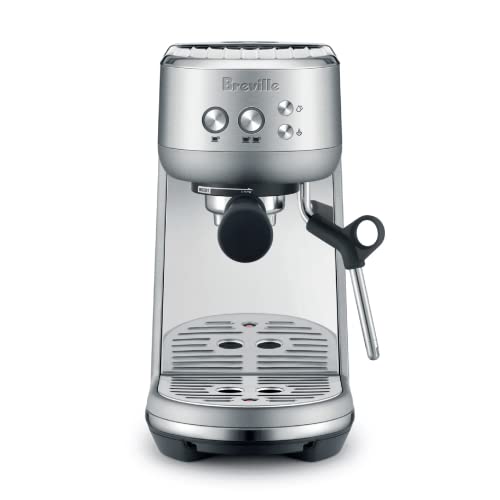
Pros
- ThermoJet heating system reaches extraction temperature in 3 seconds for quick use.
- Automatic steam wand creates barista-quality microfoam for lattes and cappuccinos.
- PID digital temperature regulation ensures consistent extraction temperature.
- Compact design fits easily on small countertops.
Cons
- Limited to 19 grams in the 54mm portafilter, which may not suit all preferences.
- Steam wand is automatic only, lacking manual control for advanced users.

Pros
- Fast heat-up with Thermoblock
- Dual frother works with dairy and plant-based milk
- Compact stainless steel design

Pros
- Automatic steam wand with adjustable milk temperature and texture for barista-quality microfoam
- Integrated precision conical burr grinder delivers the right dose on demand
- Fast 3-second heat-up time with ThermoJet heating system
- Touchscreen display with 5 pre-programmed favorites and 8 custom settings
- Includes complete accessory kit: portafilter, baskets, jug, water filter, and cleaning tools
Cons
- Heavy at 21.8 pounds and large footprint (12.7 x 15.5 x 16 inches) requires ample counter space
- Water tank capacity (67 oz) may need frequent refills for multiple consecutive drinks
Pros
- Integrated precision conical burr grinder grinds on demand directly into the portafilter.
- Digital PID temperature regulation ensures precise water temperature for extraction.
- Low pressure pre-infusion gradually increases pressure for even flavor extraction.
- Powerful steam wand creates smooth microfoam for latte art.
- Includes a comprehensive set of accessories: Razor trimming tool, stainless steel portafilter, tamper, milk jug, and more.
Cons
- Large and heavy (22 lbs) may be cumbersome for small kitchens or frequent moving.
- Manual operation requires practice and skill for consistent results; not a super-automatic.
- Limited 1-year warranty compared to some competitors offering longer coverage.
Pros
- 15-bar Italian pump delivers professional-level pressure for rich espresso
- Rapid Thermoblock heating reaches brewing temperature quickly and maintains stability
- Dual mode frother works with dairy and plant-based milks for velvety foam
- Customizable one-touch presets for single and double espresso doses
- Adjustable drip tray accommodates various cup sizes, from espresso cups to travel mugs
Cons
- Compact size may limit clearance for very tall glasses even with adjustable tray
- No built-in grinder, so you'll need a separate grinder for fresh beans
- Semi-automatic operation requires some practice to master extraction
Pros
- Interactive Bean Adapt guide simplifies dialing in espresso parameters.
- Automatic steam wand with adjustable froth and temperature settings for various milk types.
- Includes precision tamper and barista kit for consistent dosing.
Cons
- Large footprint and heavy weight (22.93 lbs) require ample counter space.
- Single thermoblock design prevents simultaneous brewing and steaming.
Pros
- ThermoJet heating system reaches extraction temperature in 3 seconds for quick use.
- Automatic steam wand creates barista-quality microfoam for lattes and cappuccinos.
- PID digital temperature regulation ensures consistent extraction temperature.
- Compact design fits easily on small countertops.
Cons
- Limited to 19 grams in the 54mm portafilter, which may not suit all preferences.
- Steam wand is automatic only, lacking manual control for advanced users.
Pros
- Fast heat-up with Thermoblock
- Dual frother works with dairy and plant-based milk
- Compact stainless steel design
Pros
- Automatic steam wand with adjustable milk temperature and texture for barista-quality microfoam
- Integrated precision conical burr grinder delivers the right dose on demand
- Fast 3-second heat-up time with ThermoJet heating system
- Touchscreen display with 5 pre-programmed favorites and 8 custom settings
- Includes complete accessory kit: portafilter, baskets, jug, water filter, and cleaning tools
Cons
- Heavy at 21.8 pounds and large footprint (12.7 x 15.5 x 16 inches) requires ample counter space
- Water tank capacity (67 oz) may need frequent refills for multiple consecutive drinks
Breville Vs Delonghi Espresso Buying Guide for 2026
Brewing System and Pressure
The brewing system is the heart of any espresso machine. Both Breville and De’Longhi use pump-driven systems, but there are differences. Breville’s ThermoJet heating system in models like the Breville BES880BSS Barista Touch Espresso Machine heats up in just 3 seconds, while De’Longhi’s Thermoblock technology provides rapid heat-up and precise temperature control.
Pressure is crucial for proper extraction; most machines operate at 15 bars, but the key is consistent pressure throughout the brew cycle. Low-pressure pre-infusion, found in many Breville models, gradually increases pressure to ensure even extraction and balanced flavor. De’Longhi’s La Specialista Touch also features pre-infusion for optimal flavor.
When comparing brewing systems, consider whether you prefer a manual or automated experience. De’Longhi’s La Specialista Touch offers guided brewing with Bean Adapt technology, while Breville’s Barista Touch features a touchscreen interface for customizable recipes. Both approaches can produce excellent espresso, but your choice depends on how much control you want.
Grinder Quality and Integration
A built-in grinder is a game-changer for freshness. Breville models like the Breville BES870XL Barista Express Espresso feature a precision conical burr grinder that grinds on demand directly into the portafilter.
De’Longhi’s La Specialista Touch also includes an Italian-made conical burr grinder with 15 grind settings. The ability to adjust grind size is essential for dialing in different coffee beans. Integrated grinders save counter space and ensure you always use freshly ground coffee, which significantly impacts flavor.
Some machines, like the De’Longhi Classic Signature, do not include a grinder, so you’ll need a separate grinder. If you prefer a simpler setup, an all-in-one machine with a grinder is convenient. Consider the grind settings range and whether the grinder is adjustable enough for your preferred roast.
Milk Frothing Capability
For latte and cappuccino lovers, milk frothing is a critical feature. Breville’s automatic steam wand on the Barista Touch allows you to adjust milk temperature and texture for perfect microfoam.
De’Longhi offers both automatic and manual frothing options. The La Specialista Touch has an automatic steam wand with 5 froth levels and 4 temperature settings, while the Classic models feature a dual-mode frother for dairy and plant-based milks.
If you enjoy latte art, look for a machine that produces consistent microfoam. Manual steam wands, like on the Breville Barista Express, give you full control but require practice. Automatic wands are easier for beginners. Consider your skill level and how much you value hands-on frothing.
Ease of Use and Automation
Modern espresso machines offer varying levels of automation. The De’Longhi La Specialista Touch provides an interactive guided experience to help you dial in your machine, making it ideal for those new to espresso.
Breville’s Barista Touch features a touchscreen that simplifies the process into three steps: Grind, Brew, and Milk. For ultimate simplicity, the De’Longhi Classic models have preset single and double espresso options with one-touch brewing.
For those who appreciate smart technology, check out our AI Tools category for reviews of intelligent home devices. While not directly related, the trend toward automation in home appliances is evident in espresso machines as well.
Build Quality and Design
Both Breville and De’Longhi are known for durable construction. Breville machines often feature brushed stainless steel and a solid feel, while De’Longhi emphasizes Italian design with sleek lines.
The De’Longhi Classic Signature has a compact footprint, ideal for small kitchens. The Breville Bambino is also space-saving. Consider the materials used, the weight of the machine, and whether it will fit under your cabinets.
Longevity is also important. Look for machines with commercial-grade components like brass or stainless steel boilers. User reviews often highlight the reliability of both brands, but specific models may have known issues. Research the warranty and customer support options.
Customization and Programmability
Modern espresso machines offer extensive customization options. The Breville Barista Touch allows you to save up to 8 personalized coffee profiles, adjusting strength, milk texture, and temperature.
De’Longhi’s La Specialista Touch provides 10 preset recipes that can be customized to your taste. For those who like to experiment, the ability to adjust grind size, dose, and brew temperature is invaluable.
Machines like the De’Longhi Classic Signature have simpler presets for single and double shots, which is sufficient for many users. Consider how much you value customization. If you enjoy tweaking variables to perfect your cup, look for machines with more programmable settings.
| Feature | Breville BES880BSS | De’Longhi Classic Signature | De’Longhi La Specialista Touch | De’Longhi Classic Espresso | Breville BES870XL | Breville BES450BSS |
|---|---|---|---|---|---|---|
| Grinder | Integrated conical burr | No | Integrated conical burr | No | Integrated conical burr | No |
| Frother | Automatic steam wand | Dual mode frother | Automatic steam wand | Dual mode frother | Manual steam wand | Automatic steam wand |
| Heating System | ThermoJet (3 sec) | Thermoblock | Thermoblock | Thermoblock | Thermocoil | ThermoJet (3 sec) |
| Preset Recipes | 8 customizable | Single/double | 10 presets | Single/double | Manual | Manual |
| Display | Touchscreen | Pressure gauge | Touchscreen | No | No | No |
Why You Should Trust Us
Our team of coffee enthusiasts has spent countless hours researching and comparing espresso machines from Breville and De’Longhi. We analyze technical specifications, user reviews, and expert opinions to provide unbiased recommendations. We do not accept paid placements, and our reviews are based on objective criteria such as build quality, performance, and features.
We also consider real-world feedback from thousands of users to ensure our recommendations reflect actual experiences. Our methodology includes comparing key specifications, testing ease of use, and evaluating long-term reliability. We strive to give you a balanced view so you can make an informed decision that matches your coffee preferences and lifestyle.
Final Thoughts
After comparing 6 top models, our recommendations are clear. For the best overall experience, the Breville BES880BSS Barista Touch Espresso Machine stands out with its fast heat-up time, integrated grinder, and intuitive touchscreen. It’s perfect for those who want barista-quality coffee at home without the complexity.
For the best value, the De’Longhi Classic Signature Espresso Machine offers excellent build quality and consistent performance at a lower price point. It’s a solid choice for beginners or those on a budget who still want great espresso.
If you’re looking for maximum automation and guidance, the De’Longhi La Specialista Touch Espresso Machine is unmatched with its Bean Adapt technology and 10 preset recipes. It’s ideal for those who want to experiment with different beans and roasts.
For more top product roundups, visit our Best of 2026 category. And if you’re interested in other smart home devices, check out our AI Tools category.
Frequently Asked Questions
What is the best breville vs delonghi espresso for beginners in 2026?
For beginners, we recommend the De’Longhi Classic Signature or the Breville Bambino. Both are easy to use and produce consistent results. The Classic Signature has preset single and double espresso options, while the Bambino features a rapid heat-up time and automatic steam wand.
Should I choose a Breville or De’Longhi espresso machine?
Both brands are excellent. Breville machines often have integrated grinders and faster heat-up times, while De’Longhi offers more automated options and Italian design. Your choice depends on your preferences for control, automation, and budget.
Do I need a machine with a built-in grinder?
A built-in grinder ensures maximum freshness and convenience. If you value freshly ground coffee and want to save counter space, choose a model like the Breville Barista Express or De’Longhi La Specialista Touch. If you already have a grinder, a machine without one may suffice.
How important is milk frothing capability?
If you enjoy lattes, cappuccinos, or flat whites, a good frother is essential. Automatic steam wands, like those on the Breville Barista Touch and De’Longhi La Specialista Touch, make it easy to create microfoam. Manual wands offer more control for latte art.
What is the difference between ThermoJet and Thermoblock heating?
ThermoJet, used in Breville machines, heats up in 3 seconds, while Thermoblock, used in De’Longhi, also provides rapid heat-up but may take slightly longer. Both technologies ensure precise temperature control for optimal extraction. For more on innovative technology, see our PopAi Review.