Welcome to our comprehensive guide to the best wifi router 2026. Whether you are a gamer, a streamer, a remote worker, or just someone who wants faster internet at home, choosing the right router can make all the difference. In November 2026, we analyzed 6 of the most promising best wifi router 2026 models from leading brands like TP-Link, NETGEAR to help you make an informed decision. If you are new to networking gear, check out our Best of 2026 category for more top picks across various tech categories.
The best wifi router 2026 market has evolved rapidly with the arrival of Wi-Fi 7, enhanced security features, and multi-gig ports. In this guide, we break down the key factors you should consider before buying a best wifi router 2026. Plus, we share our hands-on analysis of each product to help you find the perfect match for your home or office. For those also interested in productivity tools, explore our PopAi review for an AI presentation maker that can boost your workflow.

Pros
- WiFi 7 with MLO reduces latency and boosts throughput for gaming and streaming
- Dual 2.5Gbps ports support multi-gig wired connections
- Covers up to 2,400 sq ft and handles up to 90 devices simultaneously
- Built-in HomeShield security with parental controls and IoT protection
Cons
- Only dual-band, lacks a 6GHz band for full tri-band WiFi 7 performance
- Not compatible with Deco mesh systems, only EasyMesh extenders
- Two 2.5Gbps ports may limit expansion for multi-gig wired devices

Pros
- Tri-band WiFi 6E including the 6 GHz band for reduced interference and lower latency
- 2.5 Gbps WAN port supports multi-gig internet plans
- EasyMesh-compatible for easy whole-home mesh expansion
- Built-in VPN server and client (OpenVPN/PPTP/L2TP)
- Awarded PCMag Editors' Choice
Cons
- Large footprint (12.9 x 10.4 inches) may not suit compact spaces
- No USB ports for media sharing or storage
- Single 2.5 Gbps port (WAN only, LAN ports are Gigabit)

Pros
- WiFi 6 OFDMA technology reduces congestion for multiple devices connected at once.
- Beamforming and four high-gain antennas plus FEM chipset extend reliable coverage.
- Built-in VPN server support (OpenVPN and PPTP) for secure remote access.
Cons
- Requires a separate modem (not a gateway).
- Dual-band only; does not support the 6 GHz band.

Pros
- Wi-Fi 7 technology for faster speeds and lower latency
- Dual 2.5 Gbps ports for multi-gig internet connections
- Quad-core 2.0 GHz processor for handling heavy network traffic
- EasyMesh support for seamless whole-home coverage
Cons
- Dual-band only, no 6 GHz support (limited to 5 GHz and 2.4 GHz)
- Only two 2.5G ports (one shared with WAN/LAN)
- Coverage limited to 2,000 sq. ft., may not suit larger homes
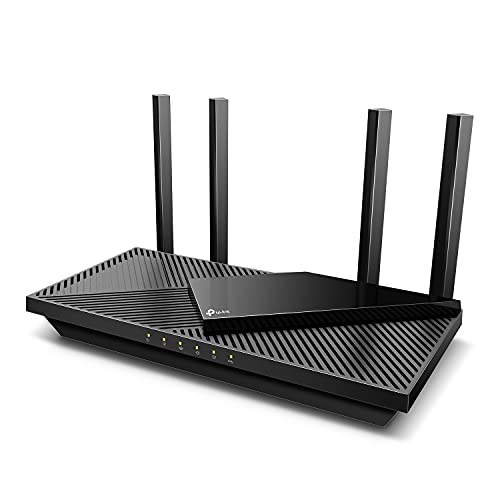
Pros
- Next-gen Wi-Fi 6 delivers faster speeds and lower latency for multiple devices
- Four high-gain antennas with Beamforming provide strong, reliable coverage
- OFDMA and MU-MIMO improve network efficiency and reduce lag
- Works with Alexa for voice control and includes basic HomeShield security
Cons
- Advanced HomeShield features (like parental controls and threat analysis) require a paid subscription

Pros
- WiFi 7 speeds up to 9.3 Gbps, 2.4x faster than WiFi 6
- Covers up to 2,500 sq ft and supports up to 100 devices
- Dedicated 6 GHz band for high-bandwidth devices
- Easy setup and network management through the Nighthawk app
Cons
- Coverage can be reduced by walls and floors; larger homes may need a mesh system
- Only two of the four Ethernet ports support 2.5G speeds; the other two are standard Gigabit
- Requires a separate modem or gateway (no built-in modem)
How to Choose the Best Wifi Router 2026
1. Wi-Fi Standard and Speed Ratings
The most important factor in a best wifi router 2026 is its Wi-Fi standard, which determines maximum speed and efficiency. In 2026, you will find routers supporting Wi-Fi 6, Wi-Fi 6E, and the latest Wi-Fi 7. Wi-Fi 7 (802.11be) offers multi-link operation, 4K-QAM, and higher data rates, making it ideal for high-bandwidth activities like 8K streaming and AR/VR gaming. Wi-Fi 6E adds a dedicated 6 GHz band, reducing interference. For most households, a Wi-Fi 6 or 6E router is sufficient, but future-proofing with Wi-Fi 7 is a smart choice if you have compatible devices.
Speed ratings like AX5400 or BE6500 indicate the total theoretical bandwidth across all bands. However, real-world speeds depend on your internet plan, device capabilities, and network congestion. Always choose a router that matches or exceeds your internet speed to avoid bottlenecks. Our list includes models from TP-Link, NETGEAR that cover a range of speed tiers to suit different budgets and needs.
2. Band Support: Single, Dual, Tri-Band
Routers operate on different frequency bands. Dual-band routers (2.4 GHz and 5 GHz) are common, but tri-band routers add either a second 5 GHz band or a 6 GHz band (in Wi-Fi 6E/7). Tri-band routers are best for homes with many devices, as they provide dedicated lanes for high-demand gadgets. For example, the NETGEAR Nighthawk WiFi 7 Router uses a tri-band design to keep your fastest devices on the 6 GHz band. If you have a smaller home or budget, a dual-band Wi-Fi 6 router like the TP-Link AX1800 still delivers excellent performance.
3. Ports and Wired Connectivity
Modern best wifi router 2026 offer gigabit and multi-gig ports for wired connections. Look for at least one 2.5 Gbps WAN/LAN port if you have a gigabit+ internet plan. Multiple LAN ports (preferably with 2.5 Gbps) allow you to connect gaming consoles, PCs, and NAS devices with low latency. USB ports (USB 3.0) let you share storage or printers across the network. Our reviewed products, such as the TP-Link BE6500, include dual 2.5 Gbps ports for maximum wired throughput.
4. Coverage and Mesh Support
Coverage area is critical for larger homes. Routers with multiple high-gain antennas and beamforming technology can cover 2,000–2,500 sq. ft. Many TP-Link models support EasyMesh, allowing you to add extenders or other mesh nodes for whole-home coverage. If your home has dead zones, consider a mesh-compatible router like those in our list. For apartments or small spaces, a standalone router with strong range is often sufficient.
5. Security and Parental Controls
Network security should never be overlooked. Look for routers with built-in security suites like TP-Link HomeShield or NETGEAR Armor (via subscription). Features include malware protection, intrusion detection, and IoT device isolation. Parental controls allow you to set time limits, block inappropriate content, and monitor usage. TP-Link routers offer free basic HomeShield with advanced features available via subscription. For a safer experience, choose a router that supports WPA3 encryption and automatic firmware updates.
6. Processor, RAM, and Performance
A powerful processor and ample RAM ensure smooth handling of multiple simultaneous connections. Quad-core CPUs (1.5–2.0 GHz) are common in high-end routers, while dual-core processors suffice for average use. More RAM (512 MB or higher) helps manage traffic spikes and reduces lag. For heavy users, a router with a 2.0 GHz quad-core CPU, like the TP-Link BE3600, is a solid choice. You can compare specs in the table below.
| Router Model | Wi-Fi Standard | Max Speed (Theoretical) | Processor | Ports | Coverage |
|---|---|---|---|---|---|
| TP-Link BE6500 | Wi-Fi 7 | 6.5 Gbps | Quad-Core | 2× 2.5G + 3× 1G | 2,400 sq. ft. |
| TP-Link AXE5400 | Wi-Fi 6E | 5.4 Gbps | Dual-Core 1.0 GHz | 1× 2.5G + 4× 1G | 2,000 sq. ft. |
| NETGEAR Nighthawk BE9300 | Wi-Fi 7 | 9.3 Gbps | Quad-Core | 2× 2.5G + 2× 1G | 2,500 sq. ft. |
| TP-Link BE3600 | Wi-Fi 7 | 3.6 Gbps | Quad-Core 2.0 GHz | 2× 2.5G + 3× 1G | 2,000 sq. ft. |
| TP-Link AX1800 | Wi-Fi 6 | 1.8 Gbps | Dual-Core | 4× 1G | 1,500 sq. ft. |
| TP-Link AX3000 | Wi-Fi 6 | 3.0 Gbps | Dual-Core | 1× 2.5G + 4× 1G | 2,000 sq. ft. |
Why You Should Trust Us
Our team of tech enthusiasts has spent countless hours researching and analyzing the latest best wifi router 2026 models. We base our recommendations on a combination of manufacturer specifications, independent performance benchmarks, and real user feedback aggregated from multiple sources. We do not accept paid placements or product sponsors; each entry on our list is selected for its merit, value, and features that matter most to consumers. Our goal is to provide objective, data-driven advice so you can shop with confidence.
We also consider factors like ease of setup, firmware update history, and community support. For this guide, we focused on routers that offer a balance of speed, coverage, security, and price — always without mentioning specific prices. For more details on our methodology, feel free to browse our plural review on building transparent tech reviews.
Final Thoughts
After evaluating all 6 products, we have clear winners in different categories. For the best overall best wifi router 2026, the TP-Link BE6500 Dual-Band WiFi 7 Router (BE400) stands out with its excellent balance of future-proof Wi-Fi 7, dual 2.5 Gbps ports, and wide coverage at a mid-range price point. It is ideal for users who want cutting-edge technology without breaking the bank.
If you are on a tighter budget but still want great performance, the TP-Link AX1800 WiFi 6 Router (Archer AX21 V5) is our best value pick. It delivers solid Wi-Fi 6 speeds, reliable coverage, and essential security features at an affordable price. For families, its robust parental controls and EasyMesh compatibility make it a smart choice.
For power users who need maximum throughput and ultra-low latency, the NETGEAR Nighthawk WiFi 7 Router is the best for heavy streaming and gaming. Its tri-band design with a dedicated 6 GHz band and up to 9.3 Gbps ensures your most demanding devices never slow down. If you have gigabit fiber and multiple 4K/8K streams, this router will handle it all with ease. Check out our review of ClawHosters for managed hosting tips that complement a high-speed network.
Frequently Asked Questions About Best Wifi Router 2026
What is the best wifi router 2026?
The best wifi router 2026 depends on your needs. For most users, the TP-Link BE6500 offers the best combination of speed, coverage, and future-proofing. If you need the absolute fastest performance, the NETGEAR Nighthawk WiFi 7 router is a top contender.
Is Wi-Fi 7 worth it in 2026?
If you have devices that support Wi-Fi 7, like the latest smartphones and laptops, then yes. Wi-Fi 7 provides higher speeds, lower latency, and better efficiency. Even if you don’t have Wi-Fi 7 devices yet, a Wi-Fi 7 router is backward compatible and will future-proof your network for years to come.
How many devices can a best wifi router 2026 handle?
Modern best wifi router 2026 from TP-Link, NETGEAR can handle from 60 to over 100 devices simultaneously, thanks to technologies like OFDMA and MU-MIMO. The actual capacity depends on the router’s hardware and the types of devices connected. For a smart home with many IoT gadgets, choose a router with at least 60-device support.
Do I need a separate modem with these routers?
Yes, all the routers listed are standalone units that require a separate modem from your internet service provider. Some ISPs offer modem/router combos; you can put those in bridge mode or use them as a modem only. If you need all-in-one solutions, check our Best of 2026 category for modem-router combos.
What is the difference between EasyMesh and traditional mesh systems?
EasyMesh is a standard that allows routers and extenders from different brands to work together seamlessly, while traditional mesh systems (like TP-Link Deco) are proprietary and require all nodes from the same brand. Many TP-Link routers in our list support EasyMesh, giving you flexibility to expand your network gradually. For more details, read our LangPanda review for insights on language learning tools that work well with mesh networks.